

Nature Special Collection

The Global Flourishing Study is a longitudinal panel study that is collecting nationally representative, multidimensional well-being data from more than 200,000 people in 22 geographically and culturally diverse countries. The first wave of results highlights the value of tracking a rich set of flourishing indicators for both science and policy.
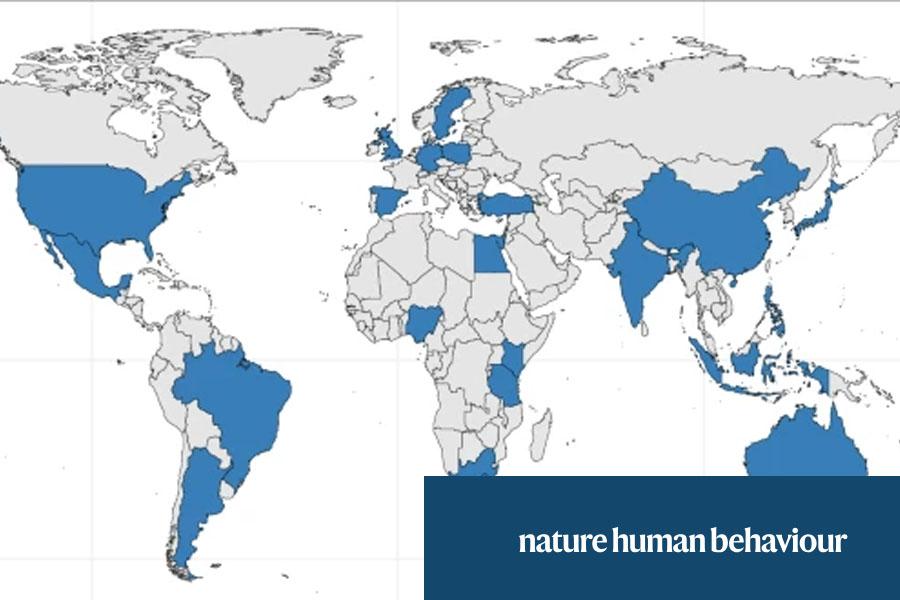
The Global Flourishing Study is a longitudinal panel study of over 200,000 participants in 22 geographically and culturally diverse countries, spanning all six populated continents, with nationally representative sampling and intended annual survey data collection for 5 years to assess numerous aspects of flourishing and its possible determinants. The study is intended to expand our knowledge of the distribution and determinants of flourishing around the world. Relations between a composite flourishing index and numerous demographic characteristics are reported.

Greater insights into what makes people happy, secure and hopeful will make for a better world.

VanderWeele and Johnson examine unidimensional versus multidimensional approaches to well-being, assessing their conceptual, empirical and policy implications. The authors argue for a multidimensional view while acknowledging practical challenges.
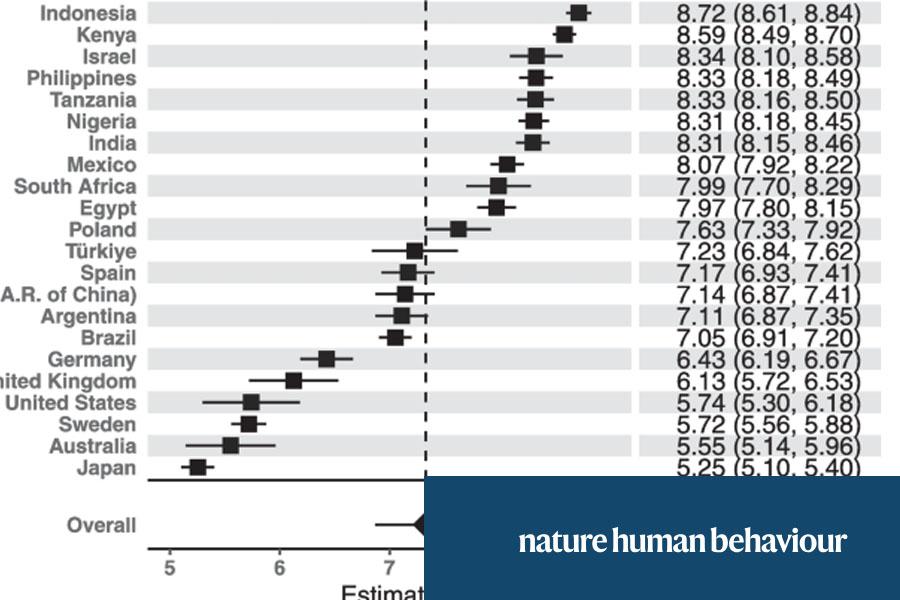
In this article, we describe the statistical and design methodology of the demographic variation analyses used as part of a coordinated set of manuscripts for wave 1 of the Global Flourishing Study (GFS). Aspects covered include the following: evaluating demographic variation, accounting for the complex sampling design, missing data and imputation, and meta-analysis. We provide a brief illustrative example of the demographic variation analyses using a measure of purpose in life from the GFS survey and conclude by outlining some strengths and limitations of the analytic and statistical methodology employed.
In this article, we describe the statistical and design methodology of the demographic variation analyses used as part of a coordinated set of manuscripts for wave 1 of the Global Flourishing Study (GFS). Aspects covered include the following: childhood predictors regression analyses, accounting for the complex sampling design, missing data and imputation, sensitivity analysis for unmeasured confounding and meta-analysis. We provide a brief illustrative example of the childhood predictor analyses using the sense of mastery construct indicator from the GFS survey and conclude by
Given the well-founded critiques of academia as Western-centric, there are increasing efforts to conduct research that is more cross-cultural and global. These dynamics apply to all aspects of life, including human flourishing, as exemplified by the new Global Flourishing Study (GFS), a longitudinal panel study investigating the predictors and components of flourishing across over 200,000 participants from 22 geographically and culturally diverse countries (Argentina, Australia, Brazil, Hong Kong [S.A.R of China, with mainland China also included from 2024 onwards], Egypt, Germany, India, Indonesia, Israel, Japan, Kenya, Mexico, Nigeria, Philippines, Poland, South Africa, Spain, Sweden, Tanzania, Turkey, UK, and USA). The research is not only comprehensive in its global reach but also its conceptual coverage of flourishing, involving 109 distinct questions (comprising a one-off intake survey of 43 items and an annual survey of 71 items, with five items shared by both). This paper elucidates the questionnaire development process, giving a transparent and open accounting of its multi-phase construction. By describing this process in detail, this article not only articulates the nature of the GFS but also serves as a useful resource in the survey development literature more broadly (e.g., for scholars undertaking similar endeavors).
The Global Flourishing Study (GFS) is an international collaboration to develop a publicly accessible data resource to promote global research on human flourishing. These data include over 200,000 participants from 22 geographically and culturally diverse countries and one territory designed to be nationally representative of the adult population. The GFS is intended as a longitudinal panel study with recruitment and empanelment for Wave 1 occurring between April 2022 and December 2023. Future waves of data collection will invite participants to complete a survey annually. The annual survey covers a robust set of measures on well-being, health, social, economic, political, religious, spiritual, psychological and demographic variables. The current paper describes the sampling methodology and weighting approaches used to project the samples to be nationally representative. Details are provided on interviewer training and data collection, probability and non-probability samples, creating weights, design effects, and future data collection stages.
Prior research suggests that cross-national cognitive interviewing can provide preliminarily insights into the extent to which survey items that will be employed in large-scale global research might be understood similarly or differently across countries. Against the backdrop of the recently launched Global Flourishing Study, we used multinational cognitive interview data from 116 individuals (M = 41.4 years, SD = 14.9, female = 50.9%) in 22 countries to explore similarities and differences in item difficulty and comprehension of five of the Global Flourishing Study survey items that are related to personal wellbeing. Interviewer observations indicated that most participants (≥ 90%) did not experience a lot of difficulty responding to each of the items. Focusing on a specific comprehension probe that was common across the five items (i.e., “In your own words, what is this question asking?”), we applied the constant comparative analytic method to generate an overarching theme for each item that captured the common core or essence of how participants across the countries interpreted the items. However, there was some variability—both between and within countries—in how responses to the probe in the different countries related to the overarching theme for each item. Given the richness of the Global Flourishing Study as a possible data resource, including its broad representativeness of the global population and availability as an open access dataset, these findings will be useful to researchers who are interested in using data from the Global Flourishing Study to study human wellbeing in different parts of the world.