

Waves 1 and 2 of the Global Flourishing Study Are Now Open Access
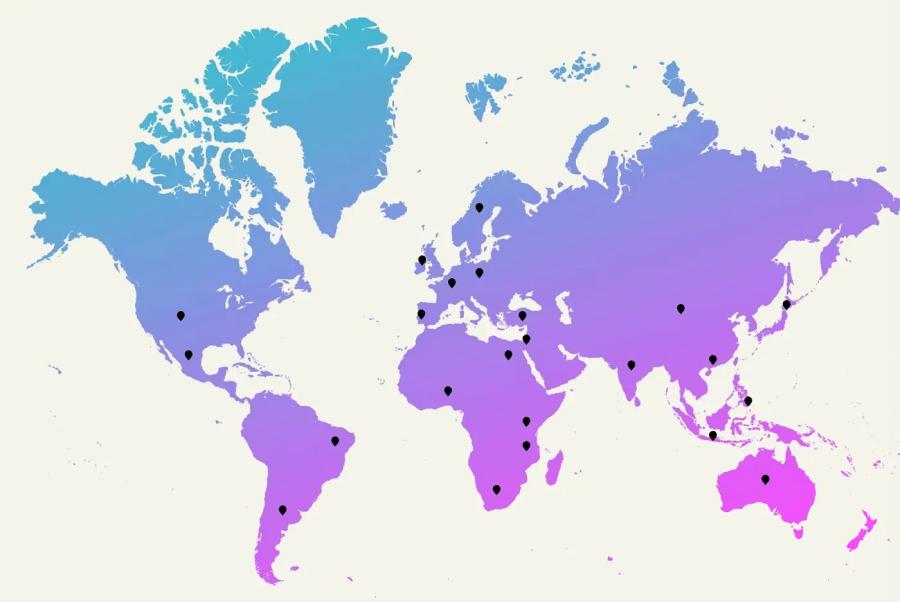
For the first time, the underlying dataset of the Global Flourishing Study is available to the public without any formal registration requirements. Waves 1 and 2 can now be downloaded freely through the Center for Open Science (OSF), opening the door to researchers, journalists, educators, and policymakers who want to work with the data directly.
What Changed
Until now, accessing GFS data required a formal pre-registration process. Researchers had to specify their hypotheses and analysis plans and submit them for review before gaining access to the dataset. That process plays an important role in protecting scientific rigor, but it also created a significant barrier for anyone outside the traditional research pipeline, including journalists exploring a story, policymakers evaluating evidence, or researchers still in the early, exploratory phase of a question.
That barrier is now gone for the first two waves of data. And researchers who do choose to pre-register their study plans through the Global Flourishing Registry can also gain access to Wave 3, the study's most recent collection.
A Milestone for the Institute
The Global Flourishing Study is co-directed by Dr. Byron Johnson, Distinguished Professor of the Social Sciences at Baylor and Director of the Institute for Global Human Flourishing, and Dr. Tyler VanderWeele of Harvard University. Fielded in partnership with Gallup and the Center for Open Science, the study tracks approximately 200,000 participants across 22 countries and one territory, measuring flourishing across six domains: happiness and life satisfaction, physical and mental health, meaning and purpose, character and virtue, close social relationships, and financial and material stability.
"We built this study because we believed the world needed a rigorous, shared language for what makes life go well," Johnson said. "Today we're putting the evidence in everyone's hands."
The study has already produced more than 90 peer-reviewed publications, including a special collection in Nature, and its findings are shaping conversations about well-being in fields ranging from public health to education to faith-based leadership.
Key Findings from the Data
Several findings from the now-public dataset have drawn particular attention from the research community and media:
A youth flourishing gap. Across countries, younger adults are reporting lower well-being than older populations, with 18-to-24-year-olds recording the lowest flourishing scores in many nations. The pattern has raised urgent questions about what is driving the decline and what interventions might help.
Wealth does not guarantee meaning. The data reveals a negative relationship between national economic development and citizens' reported sense of meaning and purpose, complicating widely held assumptions about the relationship between prosperity and the good life.
The role of faith communities. Religious participation consistently emerged as one of the strongest predictors of flourishing, even in highly secular societies. The finding suggests that faith communities foster dimensions of well-being that other institutions struggle to replicate.
How to Access the Data
Waves 1 and 2, along with documentation and instructions from Gallup, are available now for general use. A small number of sensitive variables still require Institutional Review Board approval.
"The question is no longer whether flourishing can be measured," said VanderWeele. "It's what we do with what we've found."
A fourth wave of data collection is in preparation. For more on the study and its findings, visit globalflourishingstudy.com.
The Global Flourishing Study is housed at Baylor University's Institute for Global Human Flourishing, in collaboration with Harvard University's Human Flourishing Program and Gallup.